

Glaucoma is a group of eye diseases that damage the optic nerve, the part of the eye that sends visual information to the brain. Because optic nerve damage can lead to permanent vision loss, early detection matters. At Wellish Abrams Vision Institute, comprehensive medical eye exams and glaucoma evaluations help patients understand their risk, monitor changes, and protect their sight over time.
For many patients in Las Vegas, Henderson, and Southern Nevada, the first time they hear the word is during an eye exam. That can feel alarming, especially because glaucoma often develops quietly. You may see clearly, feel fine, and still have early changes that only an eye doctor can detect.
Glaucoma Starts With The Optic Nerve
The optic nerve works like a communication cable between your eye and your brain. When glaucoma damages this nerve, it can create blind spots in your vision. In many cases, those blind spots begin in peripheral vision.
The tricky part is that your brain often fills in missing areas at first. That means early glaucoma may not blur your central vision or cause obvious symptoms. By the time vision changes feel noticeable, optic nerve damage may already have progressed.
That is why a comprehensive eye exam matters even when you do not feel like anything is wrong.

Eye Pressure And Glaucoma Risk
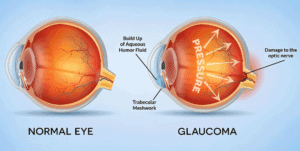
Many people connect glaucoma with high eye pressure, and pressure does play an important role. Your eyes constantly make and drain fluid. When that fluid does not drain properly, pressure can build inside the eye, increasing the risk of optic nerve damage.
Still, glaucoma is not quite that simple. Some people have high eye pressure and never develop glaucoma. Others develop glaucoma even when their eye pressure measures in a normal range. Your eye doctor considers intraocular pressure, optic nerve appearance, visual field testing, corneal thickness, family history, and other factors to assess your overall risk.
So, what is glaucoma in practical terms? It is not just “high pressure.” It is a disease process that threatens the optic nerve and requires careful monitoring.
Symptoms Can Be Easy To Miss
The most common type, open-angle glaucoma, usually develops slowly. It often causes no pain, redness, or early warning signs. Some patients do not notice a problem until peripheral vision becomes limited.
Possible glaucoma-related vision changes may include:
- Gradual loss of side vision
- Trouble seeing objects off to the side
- Patchy blind spots
- Tunnel-like vision in advanced cases
- Vision that feels less reliable in dim lighting
A sudden attack of angle-closure glaucoma is different and requires urgent care. Symptoms can include severe eye pain, headache, nausea, redness, blurry vision, or halos around lights.
Who Has A Higher Risk Of Glaucoma?
Anyone can develop glaucoma, but the risk increases with age. You may also have a higher risk if you have a family history of glaucoma, elevated eye pressure, diabetes, thin corneas, previous eye injury, or certain medical conditions.
Patients over 40 should take glaucoma screening seriously, especially if they have risk factors. Patients over 60 should stay especially consistent with routine medical eye care because glaucoma becomes more common with age.
How An Eye Doctor Checks For Glaucoma

The goal is not just to find glaucoma. The goal is to understand whether your eyes are stable, whether damage has occurred, and whether treatment may help reduce the risk of future vision loss.
Treatment Options In Brief
Treatment depends on the type and stage of glaucoma. In many cases, the goal is to lower eye pressure and protect the optic nerve. Options may include prescription eye drops, laser treatment, sustained-release medication options, or surgery.
Wellish Abrams Vision Institute offers advanced glaucoma care, including glaucoma specialist evaluations, selective laser trabeculoplasty, and, when appropriate, minimally invasive glaucoma surgery. Your doctor will recommend a plan based on your eyes, diagnosis, pressure goals, and long-term vision needs.
When To Schedule Glaucoma Care In Las Vegas
Schedule an eye exam if you have been told you have high eye pressure, have a family history of glaucoma, notice side vision changes, or have not had a comprehensive eye exam recently. You should seek prompt care for sudden eye pain, halos, nausea, redness, or sudden blurry vision.
Wellish Abrams Vision Institute provides medical eye care at locations across Nevada, including Las Vegas and Henderson. If you are due for an exam or have concerns about glaucoma, schedule an eye exam online or call the team for guidance.