Today’s cataract surgery lens options go beyond simply replacing the cloudy lens. Advanced intraocular lenses may help patients see clearly at one distance or multiple distances, reduce dependence on glasses, and correct astigmatism during cataract surgery. Depending on your eye health, lifestyle, and vision goals, your surgeon may recommend a monofocal lens, toric lens, multifocal lens, trifocal lens, extended-depth-of-focus lens, or another advanced technology lens.
Before surgery, it is important to discuss your intraocular lens (IOL) options with your care counselor and cataract surgeon. The right lens choice depends on how you use your vision every day, whether you have astigmatism, how often you want to wear glasses after surgery, and which option best suits your eyes.
MONOFOCAL SPHERICAL (standard lens)
Clareon® Monofocal Provides exceptional clarity for distance vision. You may need glasses for near and intermediate vision. If you have astigmatism, you will likely need glasses at all distances.
A basic lens that will typically allow people with otherwise completely healthy eyes to receive clarity in a single distance of vision, usually with the need for glasses at all distances chosen between a patient and their doctor for the best impact on their lifestyle (covered by insurance).
MONOFOCAL TORIC
Clareon® Toric Provides clear distance vision while correcting astigmatism. You may need glasses for clear near and intermediate vision.
Advanced lens technology aims to correct astigmatism, improving vision clarity and reducing the need for glasses for distance vision. It provides a more natural visual experience compared to standard lenses. A Toric lens implant is used for cataract patients who have higher levels of corneal astigmatism. If patients with astigmatism wish to reduce or eliminate the need for distance glasses following cataract surgery, the Toric lens is an excellent option! This lens does not correct for presbyopia or the ability to read without glasses, so reading glasses will still be needed.
MULTIFOCAL/TRIFOCAL/EXTENDED FOCUS
Clareon® PanOptix® The first and only trifocal lens available in the United States. Enjoy a full range of vision and exceptional clarity without glasses. High-performance lenses tailored to support an active lifestyle, from hobbies to daily activities, offering vision transitions between distances. TORIC versions are available.
Clareon® Vivity Allows you to see clearly at far and intermediate distances. You may require glasses for reading small print.
Where a standard lens provides vision at a single distance, an advanced technology lens such as a multifocal IOL, will be the best choice if you want to maximize your ability to focus on varying distances while minimizing your dependency on glasses. For people who are active and are inhibited by wearing glasses, multifocal lenses are a premium option that can accommodate you and your favorite activities.
Recent advancements in multifocal technology now make it possible for people to see at multiple distances without the help of magnifying glasses or bifocals (even trifocals). You can experience your vision close-up while reading the paper or your favorite book and then enjoy seeing at a distance when you’re looking at the sunset or watching TV. These lenses can consistently offer improved vision at various ranges.
LIGHT ADJUSTABLE LENS (LAL)
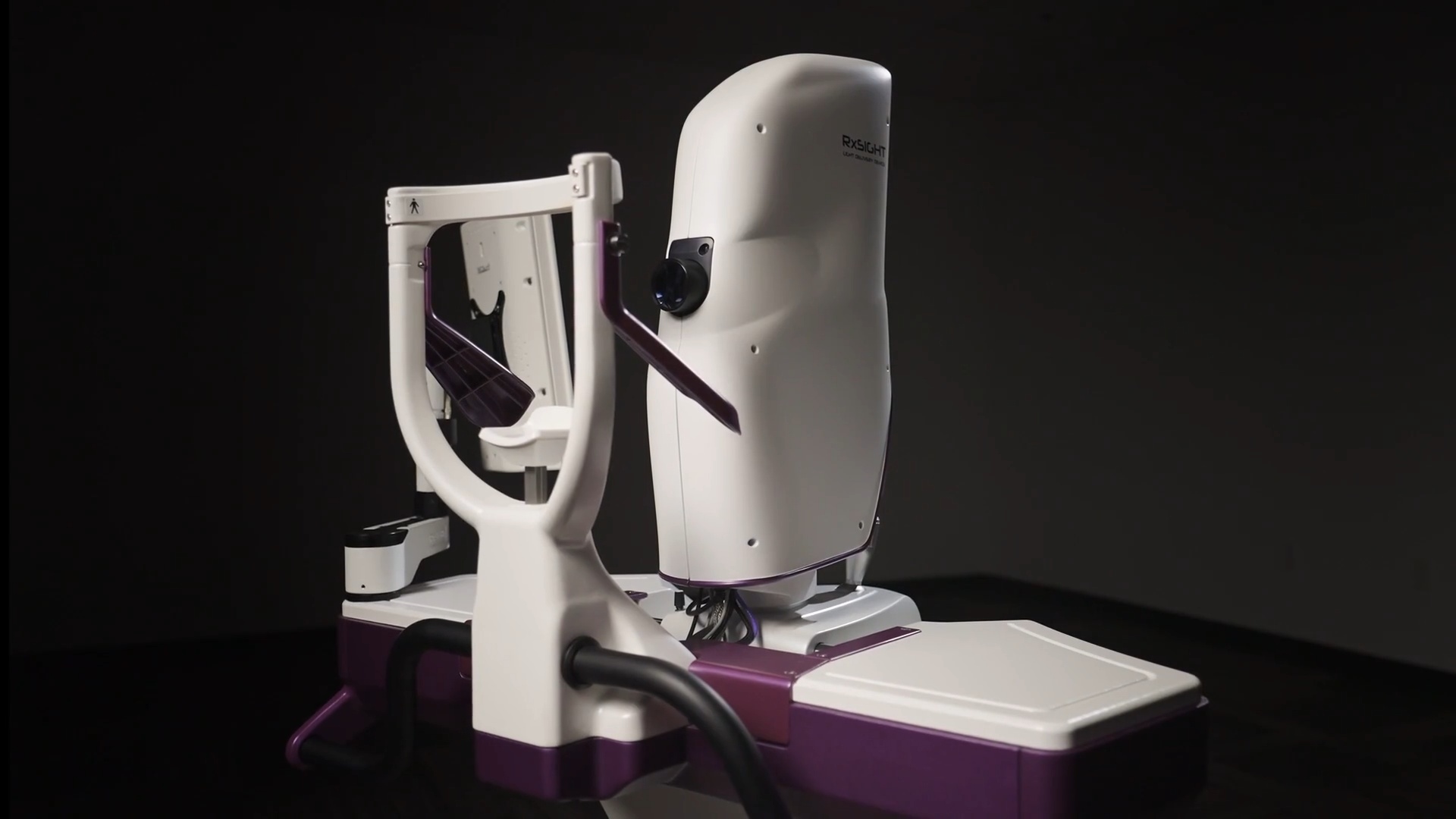
The Light Adjustable Lens™ stands as the only adjustable intraocular lens (IOL) available, providing the opportunity for vision optimization following lens implantation and recovery. The customizable LAL option provides the highest degree of precision, tailored to your specific vision needs, ensuring achievable clarity and focus. The LAL lens can be adjusted multiple times AFTER your surgery or until your prescription is right for you. If you and your doctor decide that the LAL is right for you, you will undergo standard cataract surgery, followed by additional light treatments to achieve your desired vision results.
ORA (OPTIWAVE ANALYSIS) for Real Time Measurements During Surgery
A Revolutionary New Technology to Optimize the Best Possible Vision During Cataract Surgery
Wellish Abrams Vision Institute is proud to announce yet another FDA-approved technology aimed at improving vision with cataract surgery. This new device is called ORA., Optiwave Refractive Analyzer.
ORA provides an analysis of your eye during cataract surgery that is not possible with conventional measurements and instruments. The technology works by directing an invisible beam of low-intensity light into the eye during cataract surgery. This light then reflects from the eye and sensors within the ORA device analyze the eye’s unique optical characteristics. This information then allows our surgeons to choose the most accurate intraocular lens implant and more accurately correct astigmatism for every patient who chooses to use this technology.
Ideal candidates are patients who want the most accurate results, patients who choose advanced technology implants like multifocal, accommodative, and Toric implants, patients who desire more accurate astigmatism corrections, patients with prior PRK or LASIK, and in conjunction with LenSx (laser cataract surgery).
For more information about ORA and what it can do for you, please feel free to discuss this with our cataract refractive team.
Benefits of ORA
ORA analysis is used to optimize any cataract procedure regardless of the lens that you and your surgeon select
Your surgeon will receive an ORA analysis that will guide the correction of your eye to help ensure optimal outcomes
If you have astigmatism, ORA may improve the accuracy of your correction to help reduce the chance that you will need eyeglasses after your cataract treatment
Manage Consent
To provide the best experiences, we use technologies like cookies to store and/or access device information. Consenting to these technologies will allow us to process data such as browsing behavior or unique IDs on this site. Not consenting or withdrawing consent, may adversely affect certain features and functions.
Functional
Always active
The technical storage or access is strictly necessary for the legitimate purpose of enabling the use of a specific service explicitly requested by the subscriber or user, or for the sole purpose of carrying out the transmission of a communication over an electronic communications network.
Preferences
The technical storage or access is necessary for the legitimate purpose of storing preferences that are not requested by the subscriber or user.
Statistics
The technical storage or access that is used exclusively for statistical purposes.The technical storage or access that is used exclusively for anonymous statistical purposes. Without a subpoena, voluntary compliance on the part of your Internet Service Provider, or additional records from a third party, information stored or retrieved for this purpose alone cannot usually be used to identify you.
Marketing
The technical storage or access is required to create user profiles to send advertising, or to track the user on a website or across several websites for similar marketing purposes.


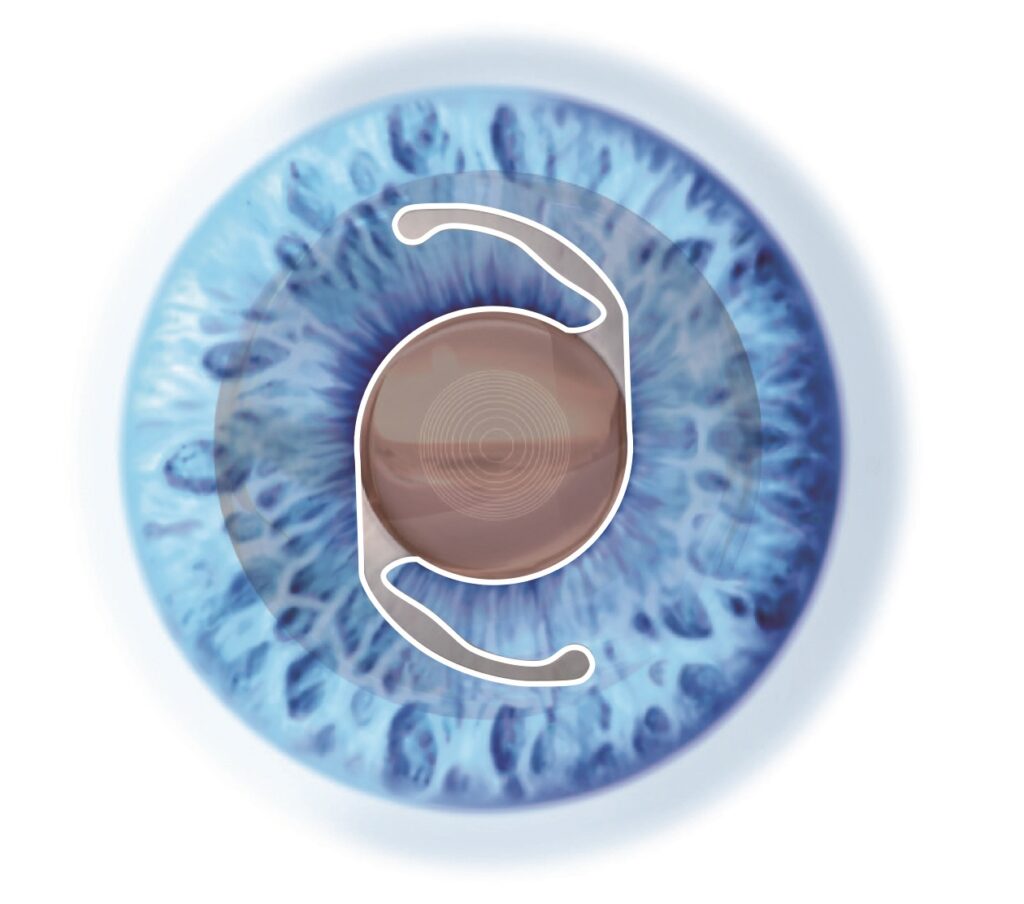 Advanced lens technology aims to correct astigmatism, improving vision clarity and reducing the need for glasses for distance vision. It provides a more natural visual experience compared to standard lenses. A Toric lens implant is used for cataract patients who have higher levels of corneal astigmatism. If patients with astigmatism wish to reduce or eliminate the need for distance glasses following cataract surgery, the Toric lens is an excellent option! This lens does not correct for presbyopia or the ability to read without glasses, so reading glasses will still be needed.
 The Light Adjustable Lens