Cataract Lens Options: How to Choose the Right IOL
Cataract lens options can feel surprisingly personal when you picture life after surgery. Will you be able to drive through Las Vegas at night, read a restaurant menu, check your phone, or enjoy a round of golf without constantly reaching for glasses?
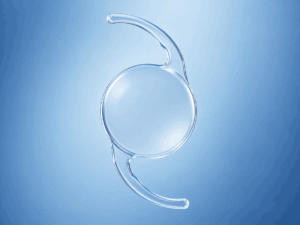
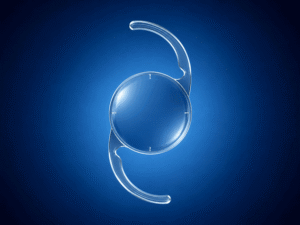
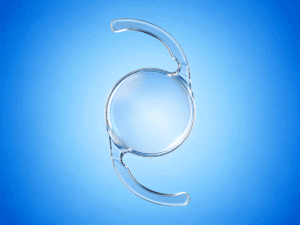
During cataract surgery, the cloudy natural lens is removed and replaced with a clear artificial intraocular lens (IOL). Wellish Abrams Vision Instituteoffers several options, including monofocal, toric, trifocal, extended-depth-of-focus, and Light Adjustable Lens. The right choice depends on your eye health, astigmatism, daily activities, budget, and how much you hope to reduce your dependence on glasses.
Patients consideringcataract surgery in Las Vegas and Henderson do not need to arrive knowing which lens they want. Your cataract surgeon and care team will measure your eyes, discuss your priorities, and explain which options may fit your vision goals.
Why Your Cataract Lens Choice Matters
Removing the cataract clears the cloudy lens, but the new IOL also determines how your eye focuses afterward. Some lenses provide clear vision at one selected distance. Others are designed to support vision across multiple ranges, correct astigmatism, or allow adjustments after the eye heals.
There is no single “best” cataract lens for every patient. A lens that fits someone who reads frequently may not be the right choice for someone who prioritizes nighttime driving. Likewise, a patient with astigmatism, previous LASIK, dry eye, glaucoma, corneal disease, or retinal concerns may need a different approach.
The goal is not to select the lens with the longest feature list. Choose the option that offers the most useful balance of clarity, range, predictability, follow-up care, and realistic expectations for your eyes.
Quick Lens Option Guide
Cataract Lens Option
Vision Range
May Be Considered For
Likely Need for Glasses
Important Consideration
Standard monofocal
One selected distance, usually far
Patients are comfortable using glasses for other distances
Reading or computer glasses are often needed
Usually included with standard cataract surgery benefits, subject to insurance
Toric monofocal
One selected distance plus astigmatism correction
Patients with corneal astigmatism who prioritize clearer distance vision
Reading glasses are usually still needed
Must be selected and positioned for the measured astigmatism
Trifocal or multifocal
Far, intermediate, and near
Patients seeking a broader range of vision and less dependence on glasses
Glasses may still help with certain tasks
Night vision, contrast, and visual expectations should be discussed
Extended depth of focus
Distance through intermediate
Patients who prioritize driving, screens, cooking, and other arm’s-length tasks
Reading glasses may be needed for small print
Provides less near emphasis than a trifocal lens
Light Adjustable Lens
Vision target refined after healing
Patients who value postoperative customization and can complete added follow-up care
Depends on the selected final vision target
Requires UV-protective glasses and several light-treatment visits
Standard Monofocal Lenses Provide One Main Focal Distance
A standard monofocal lens provides clear focus at one selected distance. Most patients choose distance vision, allowing them to see across a room, watch television, and drive more clearly after surgery.
Because a monofocal IOL does not provide a full range of focus, patients commonly use reading glasses for books, menus, phones, and close work. Computer glasses may also help with intermediate tasks, depending on the chosen lens target.
The monofocal lens is the standard option identified by the Wellish Abrams Vision Institute. It may be a sensible choice for patients who want dependable single-distance correction and do not mind wearing glasses for other activities.
Toric Lenses Correct Cataracts and Astigmatism
Astigmatism occurs when the cornea or natural lens has uneven curvature, causing light to focus irregularly. Vision may appear blurry, shadowed, stretched, or less crisp at multiple distances.
A toric IOL is designed to correct corneal astigmatism during cataract surgery. The Clareon® Toric option offered by Wellish Abrams Vision Institute can improve distance clarity for qualifying patients while reducing the need for distance glasses. Because it remains a monofocal lens, reading glasses are generally still needed.
Patients who experience glare, distorted vision, or difficulty driving at night can learn more aboutastigmatism symptoms and treatment before their cataract consultation.
Trifocal Lenses Expand Near, Intermediate, and Distance Vision
Distance vision for driving, television, and outdoor activities
Intermediate vision for computers, dashboards, cooking, and conversation
Near vision for phones, books, labels, and menus
Wellish Abrams Vision Institute offers the Clareon® PanOptix® trifocal lens, including toric versions for certain patients with astigmatism. This option may appeal to people who want to reduce their overall dependence on glasses across a wider range of everyday activities.
A broader range of focus does not guarantee that glasses will never be needed. Your surgeon will also discuss night driving, contrast, lighting conditions, and whether the health of your cornea, retina, optic nerve, and tear film supports this type of lens.
Extended-Depth-of-Focus Lenses Prioritize Distance and Intermediate Vision
An extended-depth-of-focus lens, often shortened to EDOF, is designed to create a longer continuous range of focus rather than separate focal points.
EDOF lenses emphasize distance and intermediate vision and can support activities such as driving, using a computer, seeing a vehicle dashboard, cooking, shopping, and working around the house. Reading glasses may still be needed for small print or detailed close work.
An EDOF lens may be worth discussing when intermediate vision matters more to you than strong unaided near vision. Your surgeon can help you compare that tradeoff with monofocal and trifocal options.
The Light Adjustable Lens Can Be Refined After Surgery
Traditional IOL power is selected before surgery using detailed measurements and lens-calculation formulas. The Light Adjustable Lens™ adds another step by allowing the lens power to be refined after the eye has healed.
Following surgery, the patient undergoes a series of brief, light treatments that adjust the implanted lens toward the agreed-upon vision target. A final treatment locks the lens power in place. Wellish Abrams Vision Institute states that patients typically complete three to five treatments and must wear UV-protective glasses during waking hours until the adjustment process is complete.
The Light Adjustable Lens may appeal to patients who value postoperative customization, particularly when the final target is difficult to predict before surgery. However, it requires a commitment to additional appointments and strict use of the prescribed protective glasses.
Your preferred distance, intermediate, and near targets
Wellish Abrams Vision Institute also offers ORA (Optiwave Refractive Analysis) for appropriate cataract procedures. ORA is not a lens. It is an intraoperative measurement technology that provides the surgeon with additional information during surgery and may help guide IOL power selection and astigmatism correction.
Your surgeon may recommend a standard lens when an advanced option would not provide a meaningful advantage. Choosing standard technology is not choosing inferior care. It may simply be the most appropriate match for your eye health, expectations, and comfort with glasses.
Insurance Coverage and Premium Lens Costs
Standard cataract surgery with a conventional monofocal lens may be covered by Medicare or medical insurance when the procedure is medically necessary. Deductibles, copays, coinsurance, network rules, and plan requirements still apply.
Advanced lenses designed to correct astigmatism, expand the range of vision, or allow postoperative customization often involve additional out-of-pocket costs. Coverage varies, so your care team should review both the medical benefits and optional upgrades before surgery is scheduled.
Before your consultation, think about the situations in which clear vision matters most.
Consider whether you:
Drive frequently after dark
Read books or printed materials every day
Spend hours using a computer or tablet
Play golf, pickleball, cards, or other visually demanding activities
Cook, sew, paint, build models, or work with fine details
Have astigmatism
Prefer glasses for some tasks or strongly want to reduce their use
Can return for several postoperative adjustment visits
Previously had LASIK, PRK, or another eye procedure
Bring those priorities to your appointment. “Which lens is best?” becomes much easier to answer when your surgeon understands which distances and activities shape your day.
Patients preparing for cataract surgery can also review what to expect before surgery and the typical recovery process.
Compare Cataract Lens Options in Las Vegas and Henderson
Wellish Abrams Vision Institute provides cataract evaluations, advanced measurements, lens counseling, surgery, and follow-up care for patients throughout Las Vegas, Henderson, and Southern Nevada. The practice offers clinics at Fort Apache, Flamingo, Box Canyon, and Henderson, with cataract surgical care supported by the Box Canyon Surgery Center.
Cataracts often progress gradually. If cloudy vision, glare, faded colors, or difficulty driving at night have begun to interfere with daily life, review theearly signs of cataracts and arrange an evaluation.
The main cataract lens options include standard monofocal, toric monofocal, multifocal or trifocal, extended-depth-of-focus, and adjustable IOLs. Each option supports a different combination of focal range, astigmatism correction, glasses independence, cost, and follow-up care.
There is no single best cataract lens for everyone. The right choice depends on your eye health, astigmatism, previous eye surgery, daily activities, visual priorities, budget, and expectations about wearing glasses.
Trifocal, multifocal, EDOF, toric, and Light Adjustable Lens options may reduce dependence on glasses for qualifying patients. The amount of glasses independence varies by lens design and individual results. No lens can guarantee that you will never need glasses.
Yes. A toric IOL is designed to correct corneal astigmatism during cataract surgery. Some trifocal lenses also have toric versions. Your eye measurements will determine whether astigmatism correction is appropriate.
PanOptix is a trifocal lens designed to support far, intermediate, and near vision. Vivity is an extended-depth-of-focus lens that emphasizes distance and intermediate vision. Patients using Vivity may still need reading glasses for small print.
The Light Adjustable Lens is different, rather than automatically better. It allows lens power to be refined after healing, but it also requires UV-protective glasses and several postoperative light treatments. Your eye health, schedule, and vision priorities determine whether it is a good fit.
Medical insurance may cover medically necessary cataract surgery and a conventional monofocal lens, subject to plan rules. Toric, trifocal, EDOF, adjustable, and other advanced options may involve additional costs that are not fully covered.
Some patients with previous LASIK may qualify for an advanced cataract lens, but prior refractive surgery can make lens calculations more complex. Detailed measurements and a cataract surgeon’s evaluation are necessary before recommending an option.
Wellish Abrams Vision Institute provides cataract evaluations and lens counseling for patients in Las Vegas, Henderson, and surrounding Southern Nevada communities. During the evaluation, the care team reviews your measurements, eye health, insurance, lifestyle, and vision goals.
Related Posts
Schedule Your Eye Exam Today
If blurry vision, eye strain, changing prescriptions, dry eyes, or trouble seeing clearly is affecting your daily life, it may be time to schedule a comprehensive eye exam. Wellish Abrams Vision Institute provides eye care for patients in Las Vegas, Henderson, and nearby Southern Nevada communities.
To provide the best experiences, we use technologies like cookies to store and/or access device information. Consenting to these technologies will allow us to process data such as browsing behavior or unique IDs on this site. Not consenting or withdrawing consent, may adversely affect certain features and functions.
Functional
Always active
The technical storage or access is strictly necessary for the legitimate purpose of enabling the use of a specific service explicitly requested by the subscriber or user, or for the sole purpose of carrying out the transmission of a communication over an electronic communications network.
Preferences
The technical storage or access is necessary for the legitimate purpose of storing preferences that are not requested by the subscriber or user.
Statistics
The technical storage or access that is used exclusively for statistical purposes.The technical storage or access that is used exclusively for anonymous statistical purposes. Without a subpoena, voluntary compliance on the part of your Internet Service Provider, or additional records from a third party, information stored or retrieved for this purpose alone cannot usually be used to identify you.
Marketing
The technical storage or access is required to create user profiles to send advertising, or to track the user on a website or across several websites for similar marketing purposes.