Myopia Treatment: Nearsightedness Symptoms, Diagnosis, and Next Steps
Myopia treatment helps you see clearly at a distance by bringing the focal point back onto the retina, usually with glasses or contact lenses, and sometimes with longer-term vision correction for the right adult candidate. Myopia, also called nearsightedness or shortsightedness, is becoming more common worldwide, and it is a major contributor to long-term vision problems, so getting the plan right early really matters.
At Wellish Abrams Vision Institute in Las Vegas and Henderson, we see firsthand how myopia affects children, teens, and adults. While glasses and contacts can correct blurry distance vision, modern research shows myopia is more than a prescription; it reflects how the eye grows and develops over time. Understanding how your myopia is changing helps you make smarter decisions about long-term eye health, whether that means slowing progression in kids and teens or refining comfort, clarity, and options for adults.
What Is Myopia?
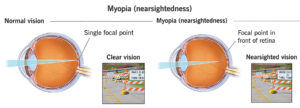
Myopia is a refractive error that causes distance vision to blur because the eye focuses light in front of the retina rather than on it. Many people with myopia see well up close, especially early on, which is why it can creep in gradually.
Myopia is common and often starts in childhood. For some people, it stabilizes in early adulthood, while others notice slow changes over time. The goal is not just sharper distance vision; it is also a plan that keeps your correction accurate and supports long-term eye health.
Myopia is measured in diopters (D):
Mild myopia: -0.50 to -1.50 D
Moderate myopia: -1.50 to -6.00 D
High myopia: Greater than -6.00 D
Higher levels of myopia are associated with a greater risk of eye disease later in life.
Common Myopia Symptoms
Myopia symptoms can be obvious or subtle. Common signs include:
Blurry distance vision (street signs, TV, whiteboards, faces across a room)
Squinting to sharpen clarity
Headaches or tired eyes, especially after switching focus between distances
Eye strain with driving, especially at night
Sitting closer to the screens to see comfortably
If you ever notice sudden vision loss, flashes of light, a curtain-like shadow, or a sudden burst of floaters, do not wait. Those symptoms need prompt evaluation because they can signal a retinal problem rather than routine nearsightedness.
Why You Squint With Myopia
Squinting is your body’s quick hack. When you squint, you narrow the opening through which light passes, temporarily sharpening a blurry image. It is a short-term trick, not a solution, and it usually leads to more strain by the end of the day. If you are constantly squinting to read signs, it is a strong clue your prescription needs an update or your astigmatism is under-corrected.
What Causes Myopia?
Myopia usually relates to eye shape. In many cases, the eye grows a bit longer from front to back, so images focus in front of the retina instead of on it. Genetics can play a role, and visual habits and environment may contribute, especially during the school years, when near work increases and outdoor time decreases.
These issues get mixed together all the time, and they can occur together.
Myopia: distance blur because light focuses in front of the retina
Astigmatism: distortion or “shadowing” at any distance due to an uneven curve of the cornea or lens
Presbyopia: age-related near focusing difficulty that often begins in the 40s
If your glasses feel “almost right” but not crisp, the problem might not be stronger lenses. It may be a mix of myopia, astigmatism, dry eye, or early near-vision changes that need a more tailored approach.
How Myopia Is Diagnosed at Wellish Abrams Vision Institute
Diagnosing myopia is usually straightforward, but a good exam does more than assign a prescription. A comprehensive eye exam may include:
Distance and near vision testing
Refraction to find the clearest, most comfortable prescription
Measurements that help confirm how your eyes focus
Eye health evaluation of the cornea, lens, retina, and optic nerve
Dilation or imaging when appropriate
This matters because two people can share the same prescription strength and still need different solutions based on how their eyes work together, how much time they spend on screens, and whether dryness makes their vision fluctuate.
Understanding Your Myopia Prescription
Most myopia prescriptions use a minus number (for example, -2.00). That minus power shifts the focal point back onto the retina for clearer distance vision.
Your prescription may also include:
Cylinder and axis, if you have astigmatism
An add power if presbyopia is also present, and you need near support
If your vision is technically clear but feels uncomfortable, the best fix is often a more precise prescription, better measurements, or a different lens design, not simply “stronger lenses.”
Myopia Treatment Options
Myopia treatment should match how you live, not force you to work around your vision. Most people start with glasses or contacts, then decide whether they want to explore longer-term vision correction.
Eyeglasses for Myopia Treatment
Glasses are the most common and reliable treatment for myopia. They can be tailored to your routine:
Single-vision lenses for distance
Anti-reflective coatings to reduce glare, especially for night driving
Better astigmatism correction to sharpen contrast and reduce strain
Computer or occupational designs if you switch between screens and distances often
If your glasses feel “almost right,” the issue is often frame fit, lens design, or measurement accuracy. Small refinements can make a big difference in comfort.
Comfort matters. If contacts feel dry or inconsistent, your doctor may adjust lens material, wearing schedule, or treat dry eye first so your vision stays stable throughout the day.
Vision Correction for Adults with Myopia
While myopia management focuses on slowing progression in children, adults often look for longer-term vision correction to reduce dependence on glasses or contact lenses. At Wellish Abrams Vision Institute, the goal is simple: match you with the safest option that fits your prescription, your eyes, and your lifestyle, not a one-size-fits-all procedure.
At Wellish Abrams Vision Institute, vision correction options for myopia may include:
LASIK
LASIK is a popular option for adults with mild to moderate myopia who want quick visual recovery and less reliance on glasses. Your surgeon uses laser vision correction to reshape how your eye focuses, so distance vision becomes sharper and more consistent for daily life.
PRK
PRK is a surface laser vision correction option that can be a great fit for certain patients, including people with specific eye measurements or active lifestyles. Recovery from PRK can take longer than from LASIK for many people, but it can deliver excellent long-term clarity for the right candidate.
EVO ICL
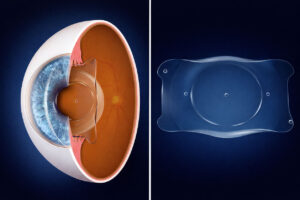
EVO ICL is an implantable lens option designed for moderate to high myopia and for patients who may not qualify for LASIK. Because it does not remove corneal tissue, it can be a strong choice when the goal is clear vision while preserving the natural corneal structure.
No matter which option you are considering, our surgeons evaluate each patient individually to recommend the safest, most effective plan. If one procedure is not the right fit, we will walk you through the next best alternative so you still have a clear path forward.
High Myopia and Long-Term Eye Health
High myopia usually means a stronger prescription and a greater need for consistent eye health monitoring. When the eye is more elongated, it can place additional stress on delicate internal structures, particularly the retina and optic nerve.
People with high myopia have a higher lifetime risk of retinal detachment, myopic macular degeneration, and certain forms of glaucoma. The stretched shape of the eye can make the retina thinner and more vulnerable to tears or detachment. Over time, changes in the back of the eye may also contribute to myopic macular degeneration, which can affect central vision. In addition, structural differences in highly myopic eyes can increase the risk of glaucoma, making regular pressure checks and optic nerve evaluation especially important.
This does not mean something bad will happen. Many people with high myopia maintain healthy vision for life. It does mean your care plan should include routine dilated eye exams, retinal imaging when appropriate, and monitoring of eye pressure and optic nerve health. Catching retinal tears, early macular changes, or glaucoma risk factors early gives your doctor more treatment options and helps protect your long-term vision.
Night Driving With Myopia
Many people notice that night driving feels harder than it used to. Glare, halos, and headlight streaking can occur when:
You get headaches or eye fatigue after driving or switching focus
Your glasses feel “almost right” but not crisp
Your child’s myopia seems to be progressing
You want to compare myopia treatment options beyond basic updates
Seek urgent evaluation if you have sudden vision loss, flashes of light, a curtain-like shadow, or significant eye pain.
See Your Myopia Treatment Options Clearly
If distance blur, squinting, or eye strain is affecting your day, schedule a comprehensive eye exam at Wellish Abrams Vision Institute so we can confirm what is driving your symptoms, review myopia treatment options that fit your routine, and help you feel confident about your next step toward clearer, more comfortable vision.
FAQ: Myopia Treatment
Myopia is a refractive error that causes distance vision to blur because light focuses in front of the retina instead of directly on it.
Yes. Most people see clearly with glasses or contact lenses. Some adults may be candidates for refractive surgery, depending on corneal measurements and eye health.
It often changes during childhood and teen years, and some adults notice gradual shifts too. Regular eye exams keep your prescription accurate and help monitor long-term eye health.
High myopia typically refers to a stronger prescription and may require more frequent eye health monitoring because the retina can be more vulnerable in some people.
They can be safe and effective when properly fitted and worn as directed. Your doctor can recommend a lens type that suits your eyes, lifestyle, and risk of dryness.
The best choice depends on your prescription, comfort, lifestyle, and eye health. A comprehensive eye exam is the most helpful starting point for choosing a myopia treatment plan that feels good day-to-day.
Related Posts
Schedule Your Eye Exam Today
If blurry vision, eye strain, changing prescriptions, dry eyes, or trouble seeing clearly is affecting your daily life, it may be time to schedule a comprehensive eye exam. Wellish Abrams Vision Institute provides eye care for patients in Las Vegas, Henderson, and nearby Southern Nevada communities.
To provide the best experiences, we use technologies like cookies to store and/or access device information. Consenting to these technologies will allow us to process data such as browsing behavior or unique IDs on this site. Not consenting or withdrawing consent, may adversely affect certain features and functions.
Functional
Always active
The technical storage or access is strictly necessary for the legitimate purpose of enabling the use of a specific service explicitly requested by the subscriber or user, or for the sole purpose of carrying out the transmission of a communication over an electronic communications network.
Preferences
The technical storage or access is necessary for the legitimate purpose of storing preferences that are not requested by the subscriber or user.
Statistics
The technical storage or access that is used exclusively for statistical purposes.The technical storage or access that is used exclusively for anonymous statistical purposes. Without a subpoena, voluntary compliance on the part of your Internet Service Provider, or additional records from a third party, information stored or retrieved for this purpose alone cannot usually be used to identify you.
Marketing
The technical storage or access is required to create user profiles to send advertising, or to track the user on a website or across several websites for similar marketing purposes.