Cataract Evaluation: What to Expect and How to Prepare
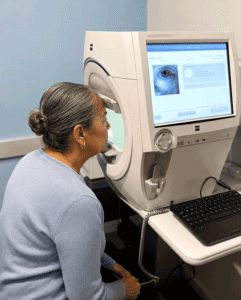
A cataract evaluation is a detailed eye appointment that confirms whether cataracts are causing your vision changes, measures the health and shape of your eyes, and helps you understand whether surgery is appropriate.
For many patients, the appointment also brings relief. Instead of wondering why night driving feels harder or why new glasses no longer sharpen their vision, they leave with a diagnosis, a personalized plan, and answers about lens options, cost, recovery, and timing.
Wellish Abrams Vision Instituteprovides cataract evaluations for patients throughout Las Vegas, Henderson, and nearby Southern Nevada communities. Your visit may include a comprehensive eye examination, pupil dilation, advanced measurements, a discussion with your cataract surgeon, and time with a patient care counselor.
Why a Cataract Evaluation Is More Than a Routine Eye Exam
A routine eye examination may identify a cataract, but a surgical evaluation of the cataract goes further.
The first goal is to confirm that the cataract is actually responsible for your symptoms. Blurry vision, glare, halos, faded colors, and trouble seeing at night can also occur with corneal disease, dry eye, glaucoma, retinal conditions, or an outdated prescription.
A dilated eye examination allows the doctor to inspect the natural lens and check other parts of the eye that could affect your vision or surgical plan. The National Eye Instituteidentifies a dilated eye exam as the standard method for diagnosing cataracts.
The evaluation also helps your surgeon determine whether surgery is needed now or whether your cataracts can be monitored. Cataract surgery is generally considered when vision changes interfere with activities such as driving, reading, working, or watching television. Most patients do not need to rush into surgery before symptoms begin affecting daily life.
Patients who are unsure whether their symptoms sound like cataracts can first review theearly signs of cataracts.
How to Prepare for Your Cataract Evaluation
A little preparation can make the appointment more productive and help your care team answer more specific questions.
Bring:
Your photo identification and insurance card
A current list of medications, supplements, and allergies
Your current glasses
Information about previous eye surgery, including LASIK or PRK
Relevant medical or eye records from another practice
A list of questions
Notes about the situations in which your vision causes the most difficulty
Think beyond the eye chart. Tell the team whether glare affects night driving, small print has become difficult to read, colors appear faded, or you need brighter light to read. Also mention whether you spend significant time using a computer, playing golf, sewing, cooking, traveling, or performing close-up detail work.
These details help your surgeon understand what clearer vision is needed to accomplish in your daily life.
Because dilation may temporarily blur near vision and increase light sensitivity, bring sunglasses and consider arranging a ride. Ask the scheduling team whether dilation, transportation, or contact lens restrictions are expected for your specific appointment.
Wellish Abrams Vision Institute’s online scheduling pagerecommends having insurance information on hand and provides location and insurance information for patients preparing for an appointment.
What Happens During a Cataract Evaluation?
Your Symptoms and Vision Goals Are Reviewed
The appointment usually begins with questions about what you are experiencing.
Your care team may ask:
When did the vision change begin?
Is one eye worse than the other?
Does glare affect daytime or nighttime driving?
Do halos appear around lights?
Are reading, television, computer work, or hobbies becoming harder?
Have your glasses prescription changed frequently?
How often do you want to wear glasses after surgery?
There are no “correct” answers. Your experience helps determine whether surgery is appropriate and which vision target may fit your priorities.
These tests help your doctor assess the cataract and identify other conditions that may affect your treatment or expected vision. A cataract can sometimes make it difficult to examine the retina, and surgery may occasionally be recommended to allow doctors to better monitor or treat retinal disease.
Your Eyes Are Measured for an Intraocular Lens
During cataract surgery, the cloudy natural lens is removed and replaced with an artificial intraocular lens (IOL).
Eye measurements help determine the appropriate lens power. These may assess the length of the eye, corneal curvature, astigmatism, and other optical characteristics. The National Eye Institute notes that measurements of eye size and shape help the surgeon select the artificial lens used during surgery.
Previous LASIK, PRK, corneal disease, dry eye, glaucoma, or retinal disease can affect lens planning. Tell the team about every prior eye procedure, even if it occurred many years ago.
You Will Discuss Cataract Lens Options
Lens selection is one of the most important parts of the cataract evaluation because the implanted lens helps determine how your eye focuses afterward.
Wellish Abrams Vision Institute offers standard monofocal lenses and advanced options that may correct astigmatism, provide a broader range of vision, or allow additional postoperative customization. Available options include monofocal, toric, trifocal, extended-depth-of-focus, and Light Adjustable Lens technology for qualifying patients.
A standard monofocal lens generally focuses at one selected distance. Advanced lenses may reduce dependence on glasses for more activities, but they can involve additional costs, visual tradeoffs, or follow-up requirements.
The cataract evaluation helps connect your medical diagnosis with your insurance benefits and lens preferences.
Standard cataract surgery with a conventional monofocal lens may be covered by medical insurance or Medicare when medically necessary. Deductibles, copays, coinsurance, network rules, facility charges, and prescription costs may still apply.
Advanced lenses, astigmatism correction, and optional technology may create additional out-of-pocket costs. Your care team can explain the available options and provide a more individualized estimate after testing and insurance review.
You may leave the appointment with one of several plans:
Monitor the cataract and return for follow-up testing
Update glasses or make temporary vision adjustments
Complete additional testing for another eye condition
Choose a cataract lens and schedule surgery
Review cost, insurance, or financing before deciding
Return for another conversation after discussing options with family
You do not need to feel rushed into a decision. Cataract surgery planning should account for your symptoms, eye health, vision goals, schedule, transportation, and comfort with the recommended lens.
Schedule a Cataract Evaluation in Las Vegas or Henderson
Wellish Abrams Vision Institute provides cataract evaluations, advanced measurements, lens counseling, surgery, and follow-up care for patients across Southern Nevada.
Clinical locations include Fort Apache, Flamingo, Box Canyon, and Henderson. Cataract surgical care is also supported by the Box Canyon Surgery Center in Las Vegas.
If cloudy vision, glare, faded colors, or difficulty driving at night are beginning to limit your independence, a cataract evaluation can replace uncertainty with a clear plan.
A cataract evaluation is a detailed eye appointment used to confirm whether cataracts are causing vision changes. It may include vision testing, pupil dilation, an eye health examination, measurements for an intraocular lens, and a discussion about surgery, lens options, recovery, insurance, and cost.
A cataract evaluation is usually longer than a basic vision check because it may involve dilation, diagnostic testing, eye measurements, and several conversations. Appointment length varies, so ask the office how much time to reserve when scheduling.
Cataracts are commonly evaluated through a dilated eye examination. Dilation allows the doctor to inspect the natural lens, retina, optic nerve, and other structures. Ask the scheduling team whether dilation is planned for your appointment.
Dilation can temporarily blur near vision and increase light sensitivity. Some patients feel comfortable driving afterward, while others prefer a driver. Bring sunglasses and consider arranging transportation.
Contact lenses can sometimes affect corneal measurements. Do not stop wearing them without instructions, but ask the scheduling team whether you should remove soft, rigid, or specialty lenses before your evaluation.
No. The appointment helps determine whether surgery is appropriate and explains your options. You may take time to review the recommendation, discuss it with family, confirm insurance benefits, or ask additional questions.
Lens options are usually discussed after your testing and eye measurements. Your surgeon can explain which lenses may fit your eye health, astigmatism, lifestyle, and glasses preferences.
Bring identification, your insurance card, a medication list, current glasses, information about previous eye surgery, relevant records, and written questions. It also helps to list the activities that cataracts are making difficult.
Coverage depends on your medical insurance, diagnosis, network, deductible, and benefit requirements. Contact your insurance provider or Wellish Abrams Vision Institute before the appointment for plan-specific guidance.
Wellish Abrams Vision Institute provides cataract evaluations at clinical locations in Las Vegas and Henderson. Patients can schedule online and select the Nevada location and appointment time that fits their needs.
Related Posts
Schedule Your Eye Exam Today
If blurry vision, eye strain, changing prescriptions, dry eyes, or trouble seeing clearly is affecting your daily life, it may be time to schedule a comprehensive eye exam. Wellish Abrams Vision Institute provides eye care for patients in Las Vegas, Henderson, and nearby Southern Nevada communities.
To provide the best experiences, we use technologies like cookies to store and/or access device information. Consenting to these technologies will allow us to process data such as browsing behavior or unique IDs on this site. Not consenting or withdrawing consent, may adversely affect certain features and functions.
Functional
Always active
The technical storage or access is strictly necessary for the legitimate purpose of enabling the use of a specific service explicitly requested by the subscriber or user, or for the sole purpose of carrying out the transmission of a communication over an electronic communications network.
Preferences
The technical storage or access is necessary for the legitimate purpose of storing preferences that are not requested by the subscriber or user.
Statistics
The technical storage or access that is used exclusively for statistical purposes.The technical storage or access that is used exclusively for anonymous statistical purposes. Without a subpoena, voluntary compliance on the part of your Internet Service Provider, or additional records from a third party, information stored or retrieved for this purpose alone cannot usually be used to identify you.
Marketing
The technical storage or access is required to create user profiles to send advertising, or to track the user on a website or across several websites for similar marketing purposes.