

One of the most common questions people ask before cataract surgery is whether they’ll still need glasses afterward. If you’ve worn glasses for years, the possibility of seeing clearly without them may be one of the most exciting parts of considering surgery.
The answer depends on several factors, particularly the type of lens replacement you choose during your procedure. While some people continue to need reading glasses after cataract surgery, others can significantly reduce their dependence on glasses for everyday activities. For example, someone who receives a standard monofocal lens designed for distance vision may see well while driving or watching television but still need glasses to read a book or use their phone.
At Wellish Abrams Vision Institute in Las Vegas & Henderson, we help patients understand their cataract lens options and how each may affect their vision after cataract surgery. Book a cataract evaluation using our online scheduler or give us a call at (702) 733-2020
How Cataract Lens Options Affect Your Need for Glasses
Choosing the right lens is one of the most important decisions you’ll make before cataract surgery. Different intraocular lenses are designed to meet different visual needs.
Monofocal Lenses
Standard monofocal lenses provide clear vision at one selected distance, typically far away.
If your lens is set for distance vision, you may be able to drive, watch television, and enjoy outdoor activities without prescription glasses. However, you’ll likely need reading glasses for close-up tasks.
Monofocal lenses are commonly used in cataract surgery and can provide excellent visual clarity at their targeted distance.
Toric Lenses
Toric lenses are designed for patients with corneal astigmatism, a condition that causes blurry or distorted vision because of the eye’s shape.
By correcting astigmatism during cataract surgery, here’s what you could expect with a toric lens:
-
Distance vision: Often clear without glasses if your lens is targeted for distance.
-
Computer vision: You might still need glasses, depending on your lens prescription.
-
Reading vision: With a standard monofocal toric lens, reading glasses are commonly needed.
-
Night driving: Lights may appear less smeared if astigmatism is corrected, although glare and halos can still occur.
Multifocal and Trifocal Lenses
Multifocal and trifocal lenses are designed to support vision at multiple distances.
Depending on the specific lens, they may help you see more clearly while:
-
Reading books or looking at your phone
-
Working on a computer
-
Driving or watching television
-
Completing everyday activities without frequently switching glasses
These lenses may significantly reduce dependence on glasses, although some patients still need them for certain activities.
Extended Depth of Focus (EDOF) Lenses
Extended depth-of-focus lenses provide a continuous range of vision, typically emphasizing distance and intermediate activities. They may be particularly helpful for activities such as using a computer, cooking, or viewing a car dashboard. However, reading glasses may still be necessary for fine print or prolonged close-up work.
Light Adjustable Lens
The Light Adjustable Lens (LAL) allows your surgeon to fine-tune your vision after the lens has been implanted. This is the only lens that allows you to experience your new vision before your final prescription is locked in. Once your eye heals, your surgeon can make approximately 1–3 light adjustments, followed by treatments that lock in the final lens prescription. You’ll also need special UV-protective glasses until your surgeon confirms that the treatment process is complete.
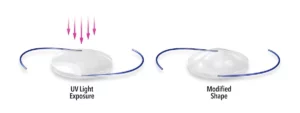
With a Light Adjustable Lens, you can significantly reduce your chances of needing glasses and eliminate glare/halos. Your vision may look:
-
Clearer and sharper: Objects, faces, road signs, and details may appear more defined, especially if cataracts previously made everything look cloudy.
-
Brighter and more vibrant: Colors may appear more natural, and whites may look less yellow.
-
Less blurry at your chosen focal distance: Your surgeon can adjust the lens to improve your distance vision, or potentially create a balance between distance and near vision.
Your surgeon may also discuss blended vision, where one eye is targeted more toward distance and the other toward near or intermediate tasks. This can reduce dependence on glasses for some people, although not everyone adapts comfortably to it.
Why You Might Need Reading Glasses After Cataract Surgery
Many patients are surprised to discover that their distance vision improves after cataract surgery, but reading small print remains difficult. This is especially common with monofocal lenses (basic/traditional cataract surgery). A standard monofocal IOL does not restore the eye’s natural ability to change focus. Instead, it provides a fixed focal point. Monofocal lenses are most commonly implanted for distance vision, so you may need reading glasses for activities such as checking text messages, reading medication labels, sewing, or working with small objects.
The need for reading glasses after cataract surgery does not mean your surgery was unsuccessful. It simply reflects how your chosen lens is designed to function.
Your Vision After Cataract Surgery
Your vision after cataract surgery may improve relatively quickly, but it takes time for your eye to heal and your prescription to stabilize.
During the first several days, it’s normal to experience some temporary changes in vision, including:
-
Mild irritation or dryness
-
Differences in vision between your two eyes if only one eye has been treated
Many people notice improvements within a few days, although healing and visual stabilization can continue for several weeks.
If you’re having cataract surgery on both eyes, your vision may feel unbalanced between procedures. Your surgeon can explain what to expect and whether temporary glasses may help.
Once your eyes have healed sufficiently, your eye doctor can determine whether prescription glasses would improve your remaining vision.
Will You Need Progressive Glasses After Cataract Surgery?
Progressive glasses after cataract surgery may still be useful, particularly if you need vision correction at multiple distances.
Progressive lenses contain multiple prescription powers in a single pair of glasses, allowing you to see at distance, intermediate, and near distances without visible bifocal lines.
You might benefit from progressive glasses if you:
-
Have a monofocal lens and need correction at multiple distances
-
Have residual astigmatism or another refractive error
-
Prefer one pair of glasses for reading, computer work, and distance activities
-
Need additional vision correction despite receiving advanced technology lenses
Your eye doctor can help determine which option best supports your daily activities.
Temporary Glasses After Cataract Surgery
You may need temporary glasses after cataract surgery while your eyes are healing, particularly if your two eyes have significantly different prescriptions.
Your existing glasses may no longer provide clear vision because the prescription in your operated eye has changed.
Some patients find inexpensive reading glasses helpful for close-up activities during recovery. Others may be more comfortable without their old glasses until they receive an updated prescription.
If your eyes have different prescriptions between surgeries, your doctor or optician may suggest a temporary adjustment to your eyewear.
It’s important not to rush into purchasing expensive prescription glasses before your vision has stabilized. Your surgeon will recommend when you’re ready for an accurate prescription. Most patients should wait until their vision has stabilized before purchasing new prescription glasses.
Your eye doctor may be able to check your new prescription within approximately two to four weeks after surgery, although the timing varies depending on healing, lens type, and whether both eyes require surgery.
Find Out If You’ll Need Glasses After Cataract Surgery in Las Vegas
Cataract surgery can do more than restore clarity to cloudy vision. With the right intraocular lens, it may also reduce your dependence on glasses for everyday activities. Whether you’re interested in standard cataract surgery or advanced technology lenses, we’ll help you understand what to expect from your vision after surgery. Schedule a cataract evaluation in Las Vegas or Henderson today to learn which lens options may be right for you.